Big Disc Energy: The Case for the 12-Inch Single in 2026
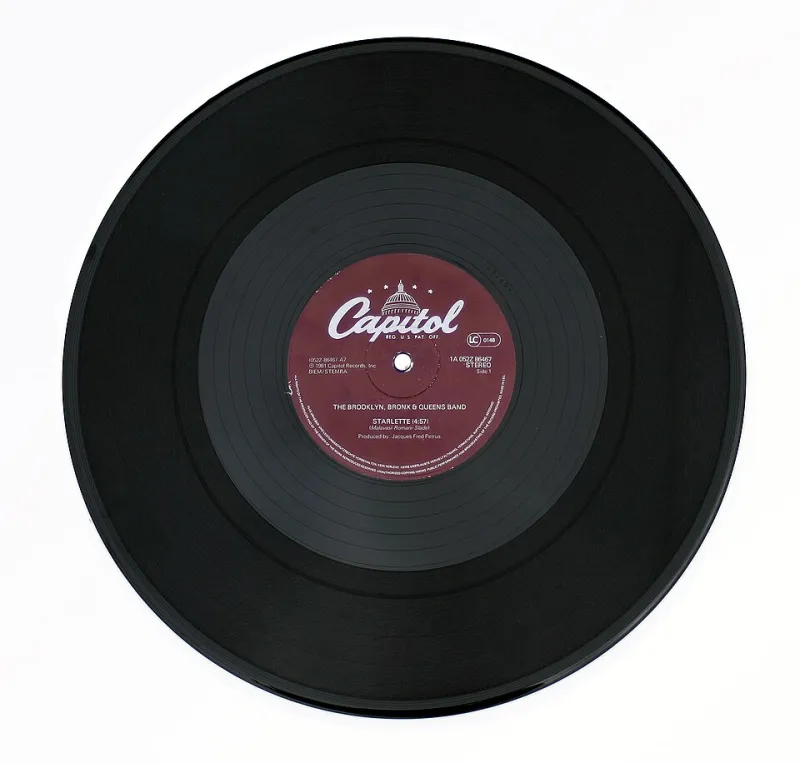
Photo: Ramon Vasconcellos, CC BY-SA 2.5, via Wikimedia Commons
The 12-inch single is not supposed to be here. It is a format from the era of discotheques, dub plates and record-shop listening posts. It takes up shelf space. It costs more to press than a 7-inch. It is not the thing you send to a playlist editor. And yet in 2026, walk into enough UK independent record shops and you will find them: fresh cuts from underground labels, sleeve art doing actual work, a B-side that exists because someone had an idea.
This is not a vinyl revival story. The revival is old enough to have its own nostalgia. This is about the 12-inch as a choice — a deliberate, slightly stubborn, artist-first choice.
A format that asks for a decision
A 12-inch single asks a different question to a digital release. It asks: what belongs here? You have more groove, more space, more time. You do not have infinite time. That is the point.
The format has a long memory in the UK underground. Soundsystem culture, dub, jungle, garage, broken beat — all of them understood that a 12-inch is a tool as much as a record. It can be played out. It can be versioned. It can carry a mix that would be too long for a radio edit and too strange for a album. It can be a statement.
'People think it's about collectors,' says the co-founder of a small UK label that has put out three 12-inches this year. 'It's not. It's about intent. If you're going to cut a 12, you have to decide what the record is for. Is it for the club? Is it for the headphones? Is it for the DJ who wants the instrumental? You can't just put everything on it and hope.'
The edit is the art
Here is the contrarian bit: the 12-inch single is not a longer song. It is a different way of thinking about a song. An extended mix should not be the original with more intro. A dub version should not be the original with the vocal muted. The format rewards artists who can edit themselves — who can hear what the song needs when the constraints change.
That is a useful skill in 2026, when so much music is released without friction. You can upload anything. You can release a six-minute track and a two-minute track and a live version and a demo in the same week. The 12-inch says: no, choose. What survives when you have twelve inches of vinyl and no skip button?
The best 12-inches in the UK underground right now are not nostalgic. They use the format to do something a stream cannot: let a groove breathe, let a vocal sit in a different room, let a B-side be a proper experiment rather than a bonus track.
Sleeve art is not decoration
A 12-inch sleeve is a small poster. It is also a contract with the listener. You are asking someone to pick up an object, look at it, turn it over, read the credits. In a scroll economy, that is almost rude. It is also refreshing.
Independent labels know this. The sleeve is part of the release, not a container for it. A good 12-inch sleeve tells you something about the record before you play it — a colour, a typeface, a photograph that does not look like an album cover. It is the opposite of a thumbnail.
At Freya, we have always liked records that look like they were made by people who care about the object. Not in a fetish way. In a 'this is the thing we made' way. The 12-inch is good at that because it has room to be a thing.
What the 12-inch teaches an artist
It teaches sequencing. It teaches collaboration — with a DJ, a remixer, a designer, a mastering engineer. It teaches you that a release is a set of decisions, not a data point. And it teaches you that a B-side can be a laboratory.
None of this means every artist should press a 12-inch. It is expensive, slow, and occasionally heartbreaking when the pressing plant delays your release by three months. But when it fits, it fits better than almost anything else. It gives a song a second life, a different context, a physical argument for its own existence.
The 12-inch single refuses to die because it still does something useful. It makes you decide. In 2026, that is worth twelve inches of shelf space.