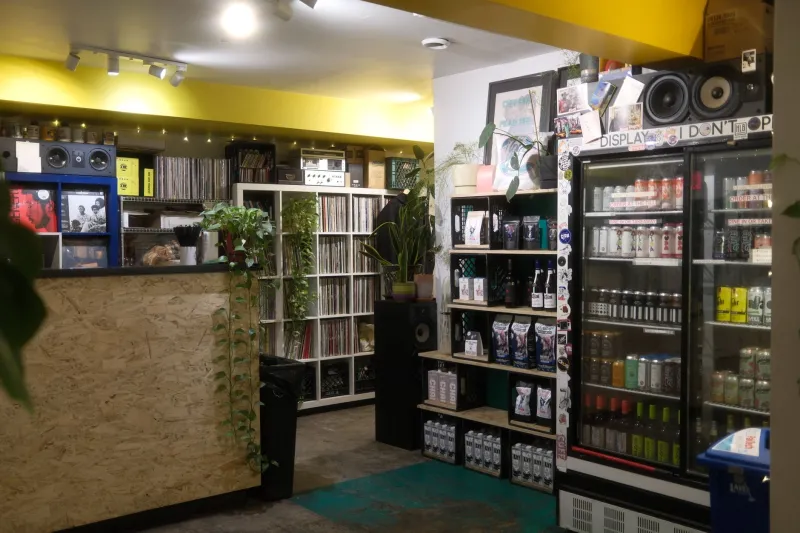
It's Not the Mix: What UK Independent Labels Are Really Listening For in a Demo
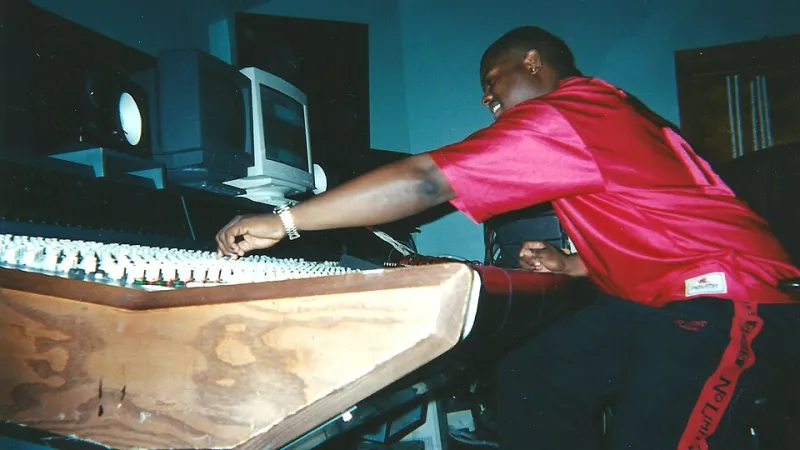
Photo: DonaldXLRobertson, CC BY 4.0, via Wikimedia Commons
Every independent label in the UK has the same Tuesday. Someone has a shared folder open, a mug of tea going cold, and forty-odd files in a queue with names like demo_final_v3_NEW.mp3. By Friday, three of them will have been played more than twice.
We spoke to a handful of A&R people and label runners at small UK independents about what actually happens in that gap. None of them wanted their names attached to anything as contentious as a demo policy, which is fair. But the answers were remarkably consistent, and they did not match the advice most artists are given. It is not polish that gets a demo saved. It is almost never the thing you spent the most money on.
The forty-second rule
Nearly everyone described the same behaviour, and it is not glamorous. The first listen happens on a laptop. The second, if there is one, happens on a phone speaker or in a car. Headphones come later, and only for the ones already marked.
That means the opening forty seconds are doing almost all the work. Not the drop at 1:40. Not the bridge. The first thing that happens, on the worst speaker in the building, while someone is half-looking at their inbox. If the song needs to be heard properly to make sense, it will not be heard properly.
One label put it plainly: they are not listening for a record, they are listening for a reason to reply.
What gets skipped
Six tracks in one email. Nobody has time to give six songs a fair hearing from an artist they have never heard of. Send three, and be honest that it is three.
The genre-chasing demo. The scene has a sound this year. It will have a different one next year. Demos that sound like a specific 2026 playlist get clocked immediately and filed under maybe-in-eighteen-months, which is where demos go to die.
Everything at maximum. Limiters on the master, compression on every bus, vocals pushed so far forward there is no room left in the song. It reads as insecurity rather than power. The mix is the least interesting thing about your demo and it is the thing most people spend the most on.
No context. Not a press release, not a biography. One line about who you are and one about the song. A file called track1.wav with an empty message is a shrug, and shrugs get shrugged back at.
What gets saved
A voice you can recognise in four seconds. This came up more than anything else. Not technically good — recognisable. Something in the delivery, the accent, the phrasing, the way a line is clipped, that could not be anyone else.
An idea in the first twenty seconds. One label described it as hearing the song before the production. If you can hum the hook after one pass on a phone, that is the whole game.
Space. Arrangements with room in them survive bad speakers. Arrangements packed to the ceiling fall apart the moment the low end disappears.
A take with air in it. Room sound, a chair creak, a count-in left in. Perfect isolation is fine. A little bit of a real room does something that no plugin has managed yet.
The horror stories
Anonymised, but all of these happened in the last year or so.
The artist who sent a demo to a label's general enquiries address with an invoice attached for studio time already spent. The one who re-sent the same three tracks eleven times over a fortnight, each time with the subject line reading following up. The submission that arrived with a fabricated quote attributed to a BBC presenter. The person who messaged every member of staff separately, in escalating tones, over four days.
None of that is a music problem. But it is what the person opening the folder remembers, and it is competing with your songs whether you like it or not.
The £3 demo
The phrase kept coming up in different forms: the demo that cost about as much as a bus fare and a pack of strings. Recorded in a rehearsal room on one mic, or on a phone propped against a radiator, or straight into a laptop in a bedroom with the window shut.
There is a reason these travel better than a £400 studio session. A cheap recording carries information a polished one sands off: how the band actually play together, whether the arrangement survives without layers, whether the person singing means it. You cannot fake hesitation, and you cannot mix in conviction.
Two of the people we spoke to said some version of the same sentence — that the demos they still think about years later sounded rough and were undeniable. Nobody said that about a demo with a clean mix and nothing underneath it.
That is not an argument for sloppiness. It is an argument for spending your money on the song and the performance and letting the recording be honest about what it is.
What to actually send
Three tracks, maximum. A private link that works without a login and stays up for a month. Files named properly. One paragraph: where you are from, what you have done live, what the song is about. And — this one surprises people — a note about what you want. A support slot. A release. A conversation. Labels are not mind readers, and a clear ask is not rude.
The bit nobody puts in the guide
Demos almost never lead directly to a signing. What they lead to is a gig offer, a support slot, a split, a message back in six months when a release is being planned. The labels that replied to us were unanimously clear that the demo is the start of a relationship, not an application form.
Which means the £3 demo and the £3,000 demo are judged by the same standard in the end. Does this sound like a person? If yes, someone will keep the file.
Send the honest one.