The Friday Route: Putting Release Day on the Map, One Shop at a Time
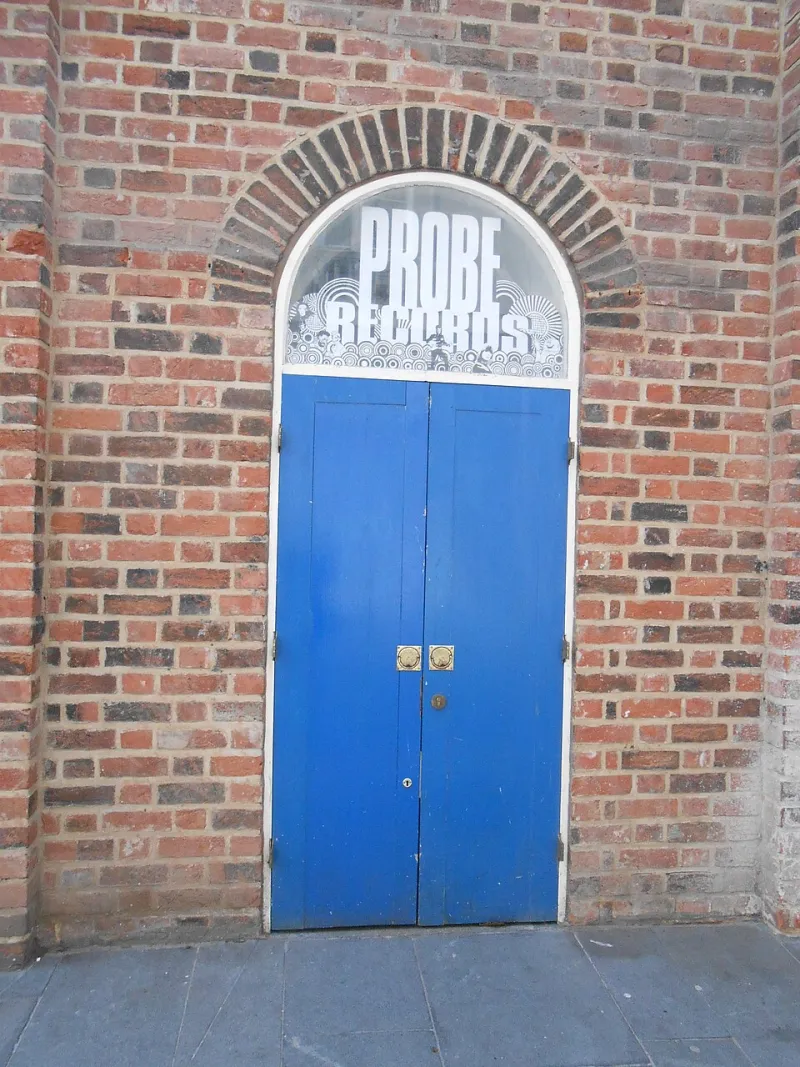
Photo: Rept0n1x, CC BY-SA 3.0, via Wikimedia Commons
Release day has a familiar rhythm now. The clock hits midnight, the streaming link goes live, the posts go out, and by breakfast the record is somewhere in the middle of a very long feed. It works, sort of. But a small UK label with 300 copies and a band with a day job cannot build a campaign out of a refresh alone. So some of them are trying something older and more stubborn: putting the release on a route.
The idea is simple enough. Instead of sending the whole pressing to one warehouse and hoping the algorithm does the rest, a label splits the stock across a handful of independent record shops and turns Friday into a walk. Not a grand tour. More like a trail: a box in Manchester, a box in Leeds, a short in-store in Bristol, a hand-delivered envelope to the shop that has been playing the demos since March. Fans get a reason to leave the house. Shops get a reason to care. The record gets a postcode.
The route is the campaign
A release-day walk only works if it is planned like a gig, not like a mailout. The labels doing this well are talking to shops six to eight weeks out, not the week before. They are asking what the shop can actually sell, what day the staff are on, whether there is room for a short set, and whether anyone behind the counter has already fallen for the record. That last part matters more than it sounds. Shop staff are early listeners with a captive audience and a good memory for what is moving. If they like the release, they will mention it to the person buying the new Fontaines D.C. reissue. If they do not, no amount of coloured vinyl will save it.
The practical shape varies. Some labels do a straight split: 50 copies here, 50 there, 100 for the webshop. Others hold back a small number for the walk itself, so there is something to hand over on the day. The stock is often delivered by hand or by train rather than courier, because couriers are expensive and a box that arrives at 4pm on Friday is not much use to a shop that opens at 10. A label owner with a rucksack and a railcard can be a more reliable distribution network than a next-day service.
What the shops actually get
The obvious answer is stock. The less obvious answer is a story. A shop that has 30 copies of a record and a label person coming in to talk about it has something to post about, something to put on the counter, something to play. That is not nothing in a month when every shop is competing for the same attention. The margin matters, of course. Most of these arrangements are sale-or-return or a straightforward wholesale split, and nobody is getting rich on 30 copies. But a release-day visit can bring in people who would not otherwise cross the threshold, and some of them will leave with something else under their arm.
The in-store is the other draw, though it needs to be kept modest. A full band with amps and a drum kit in a shop with a narrow aisle is a fantasy. A two-song acoustic set, a signing, or a listening session with the label and the artist is more realistic. The best ones are short, clearly timed, and treated as a reason to be in the shop rather than a gig that happens to be indoors. If the shop has a licence and the neighbours are fine with it, great. If not, keep it to a playback and a chat. Nobody needs a noise complaint on release day.
The maths of splitting a pressing
This is where the romance meets the receipt. Splitting a 300-press across four shops means four sets of conversations, four deliveries, four sets of sales reports and four possible reorders. It also means less stock in one place if a shop sells out in an afternoon. That can be a good problem, but only if the label has a plan for it. The labels making this work are keeping a small buffer at home, not a huge one, and they are honest with shops about what happens if the first run goes. A sold-out sticker is nice. A shop that feels left out of the second pressing is not.
The costs are real: train fares, boxes, tape, a day off work, the time it takes to stand in a shop and talk to people. This is not a model for every release. It suits a record with a local audience, a band who can show up, and a label with enough relationships to make the route feel natural rather than forced. For a debut 7-inch with no live following, a webshop and a good post might still be the saner option. The walk is a tool, not a religion.
Why it lasts longer than a refresh
A streaming release is a spike. A shop walk is a slope. The record is still there on Saturday, in a rack, with a staff recommendation sticker and a story attached. Someone picks it up because they saw the artist play two songs in the corner. Someone else buys it because the person behind the counter says it has been on all week. The label gets a slower, more visible run at the thing, and the artist gets a day that feels like a beginning rather than a notification.
None of this replaces the digital release. The link still goes live. The playlist pitch still matters. But in 2026, with pressing costs where they are and attention spread thin, a release day with an address is a useful corrective. It turns Friday from a moment on a screen into a small journey through a few rooms that actually care. The route does not need to be long. It just needs to go somewhere.