Read the Rack: What Your Merch Table Is Telling You About Your Next Move
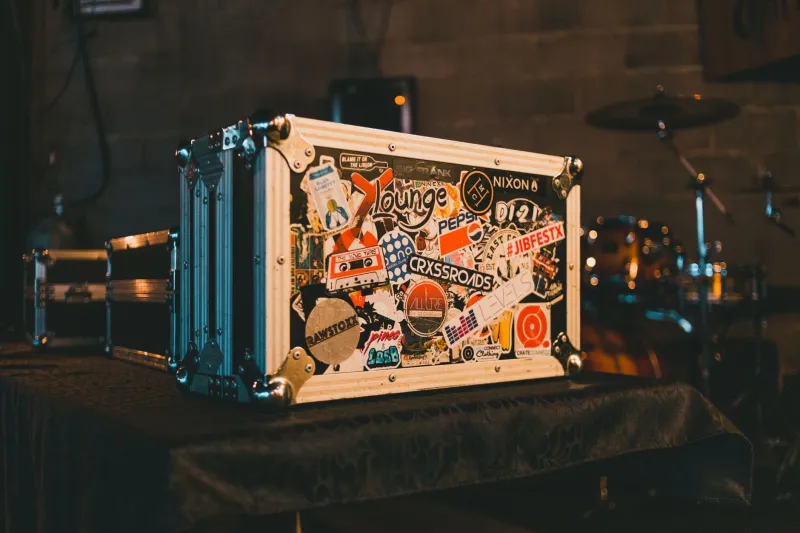
By half nine the queue at the merch table is longer than the one at the bar. Someone is holding a card reader, someone else is crouched over a plastic box of tote bags, and a third person is trying to remember whether the last medium shirt went to the bloke in the bucket hat or the one who asked about the support band. It looks like chaos. It is also the most honest market research your band will get all year.
Merch is usually talked about as a cash float with a card reader attached. Fair enough — touring is expensive, pressing is expensive, and the table pays for the van. But in 2026, with margins tighter than ever and every show carrying a train fare and a load-in time, the table is doing a second job. It is telling you who your audience actually is, where they live, what they want to wear, and which version of your band they are buying into. That is not admin. That is artist development.
The table doesn't lie, but it mumbles
A stream count tells you someone pressed play. A merch sale tells you someone stood in a room, watched you play, walked over to a folding table, and decided to hand over actual money for a piece of cotton. That is a different kind of signal. It is slower, smaller, and much harder to fake.
The problem is that most artists only look at the total at the end of the night — a number that goes in the split and then disappears. The useful information is in the detail: which design sold first, which size ran out, which town bought the tote bag rather than the shirt, and what people said while they were deciding. None of that requires a dashboard. It requires a page and a pen.
Three signals worth watching
Which designs move first
Bestsellers are useful. Velocity is better. A design that sells out before your set in Leeds is doing something different from one that lingers until the last song in Bristol. Note the timing. If a shirt moves before doors even settle, it is working as a billboard — people are wearing it to the show, not just buying a souvenir. If it only moves after the encore, it is a memento of the night. Both are valid. They just ask for different reprint decisions.
The size curve is a booking sheet in disguise
If you are consistently out of XL and 2XL by the second date of a run, your audience is broader than your order assumes. That is not just a stock problem; it is an assumption problem. The same goes for smaller sizes and for the 3XL you only ordered three of because the printer talked you into it. Watch the gaps. They tell you who is in the room, and who you are currently asking to squeeze into something that does not fit.
Postcodes are a routing hint
You do not need a formal survey. A tally is enough. If six people travelled from Stoke to a Manchester show, that is a maybe. If twenty people from Stoke turn up across three shows, that is a town with a promoter-shaped hole in your routing. Ask where people came from while you are bagging a shirt. Most people are happy to tell you. It is a conversation, not a census.
A framework that doesn't become a spreadsheet
One page per show. Four columns: design, size, rough time of sale, and town if offered. Use a tally rather than exact numbers. Ten minutes at load-out is plenty. Then, once a month, spend twenty minutes looking for patterns across three shows. Not one. Three. One show is a night. Three shows is a signal.
Keep a short note of unsolicited comments too. The person who said they bought the shirt because it reminded them of a record shop they used to go to. The one who asked whether the long sleeve came in a bigger size. The two people who wanted the same design on a hoodie. Those notes are free focus-group data, and they are much more useful than a generic online poll.
Don't turn the room into a CRM
The table is a conversation, not a checkout. There is a version of this that goes wrong: clipboards, QR codes, a five-question survey before someone can buy a sticker. Don't. The whole point is that the merch table is one of the few places left where an artist and an audience can talk without an algorithm in the middle. Keep the tracking light. Keep the postcode question optional. Let the data come from the chat, not from a form.
What to do with it
Book the return to the town that overperformed. Reprint the design that keeps selling out before the first song. Adjust the size run so the back of the queue is not met with apologies. Write your next release copy using the words people actually used at the table. Tell your label — or if you are your own label, tell yourself in a note you will actually read — what the room is asking for.
At Freya, we are not interested in turning artists into analytics departments. The point is the opposite: the merch table is the least corporate feedback loop available. It is a few hundred people in a room telling you, with their wallets and their questions, what they want next. Read the rack. Then go and make more of that.