Show Your Working: The Stage Plot That Makes a Small Room Sound Better

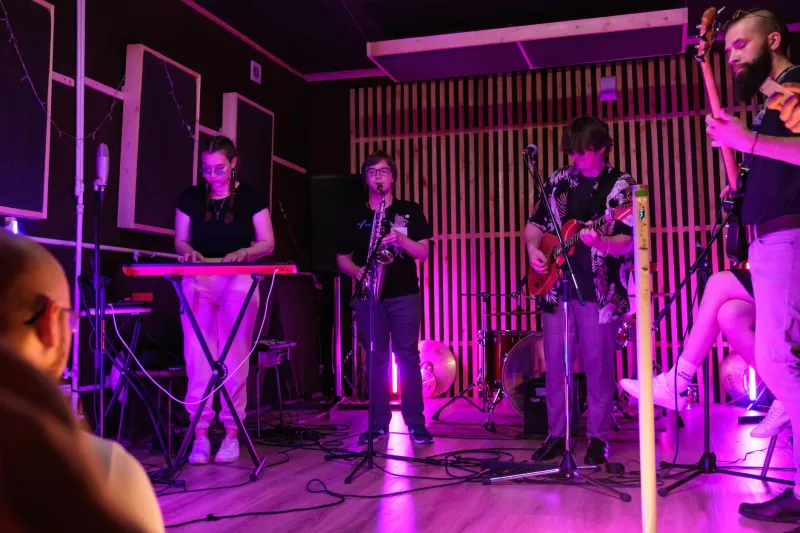
Photo: Unknown authorUnknown author, Public domain, via Wikimedia Commons
Load-in is a series of small negotiations. Where the van goes. Whether the door is locked. Who gets the trolley first. But before any of that, there’s a quieter exchange that sets the tone for the whole day: the stage plot and tech spec landing in the sound engineer’s inbox. Get that right and you buy yourself something priceless in a small UK venue — a bit of goodwill before you’ve plugged in a single cable.
A stage plot is not admin. It’s not the boring bit before the fun bit. In a 150-cap room with a shared backline, a hard curfew and a changeover that’s already running late, it’s the difference between an engineer who knows what’s coming and one who’s guessing while you’re still looking for a spare DI. It’s also, honestly, a love letter. Not the gushing kind — the practical kind. The one that says: we know you’re busy, we know this room is tight, and we’ve done our bit so you can do yours.
What the engineer actually needs
A good stage plot is not a work of art. It’s a map. It should be one page, readable at a glance, and honest about what you’re bringing. The engineer wants to know who stands where, what they play, and what needs a microphone or a DI. They want the input list to match the drawing. They want to know how many vocal mics you need, whether the drummer sings, and if the keys player is bringing a rig or relying on the house piano that may or may not exist.
Keep it top-down. Label the drum riser, the backline, the front line. Mark power drops if they matter. Note any risers or floor monitors. If you’re using backing tracks, say so clearly — and say how many channels. If you need a monitor mix for each person, put it in the notes rather than assuming the engineer will read your mind over the din of a cider-fuelled first band.
PDF is your friend. A screenshot of a notes app is not. A photo of a napkin is not. A link to a folder that requires three permissions is definitely not. One file, named properly — band name, venue, date — is the sort of small courtesy that gets remembered when the desk is tight and the clock is tighter.
The mistakes that cost you goodwill
The most common problem is drift. The plot says one thing, the input list says another, and the band arrives with an extra synth and a guest backing vocalist who definitely wasn’t on the email. Engineers are adaptable, but they’re not psychic. Changes happen — fair enough — but the earlier you flag them, the less friction there is. A quick message the day before is worth ten apologies at load-in.
Another classic: the mystery box. If it makes sound, say what it is. If it doesn’t, leave it off. “Keys” is not an input. “Keys — stereo DI, two channels” is. “Percussion” is not helpful when the percussionist turns up with a cajon, a tambourine and a laptop. Be specific, because specificity is kindness in a room with eight channels and four bands.
Then there’s the rider-as-wishlist. A tech spec is not a hospitality rider. Asking for a case of a specific beer is one conversation; asking for a grand piano in a pub back room is another. Keep the technical needs separate and realistic. If something is essential, flag it. If it’s nice to have, say so. Engineers appreciate knowing which bits are non-negotiable and which bits can be solved with a shrug and a shared DI box.
Small rooms, specific rules
UK grassroots venues in 2026 are often doing more with less. The stage might be a corner. The drum kit might be the house kit. There might be no sidefills, no spare channels, and a monitor send that’s doing three jobs at once. A good stage plot respects that reality. It doesn’t demand a full touring package; it explains how your band fits into the room as it actually is.
That means thinking about changeovers. If you’re sharing a backline, say what you’re using and what you’re leaving alone. If your guitarist needs a specific amp, note it. If they can use the house amp, say that too. If your singer needs a microphone with a switch, mention it — because the house might only have one and the engineer will need to know before the first band is halfway through their set.
It also means accepting that the engineer might have three other jobs. They might be the promoter, the door person, or the person who fixes the toilet. A clear plot reduces the number of questions they have to ask you while they’re also trying to ring out the room. That’s not just efficient; it’s respectful.
The rider is a map, not a demand
There’s a tendency to treat the tech rider as a test of whether the venue is “serious”. In small rooms, it’s more useful to treat it as a shared document. What are we bringing? What do we need? What can we live without? The best riders are calm, specific and short. They make it easy for someone to say yes.
Put your contact details at the top. Include the band name, the date and the venue. Add a line about load-in if you know it. If you’ve got a member with hearing needs or a specific monitor requirement, say it plainly and early. None of this is fussy. It’s just the working language of a gig that has a lot of moving parts and not much time.
Twenty minutes that change the day
You can write a decent stage plot in twenty minutes. Draw the stage. Label the people. List the inputs in order, left to right. Note the monitor mixes. Add a short notes section for anything that doesn’t fit. Then get someone who wasn’t involved to look at it. If they can’t tell where the drums go, it’s not finished.
Bring two printed copies to the venue, even if you’ve emailed it. Tape one to the wall by the desk. Thank the engineer by name. It sounds basic because it is. But in the UK underground, the basics are often the thing that separates a band people want to work with from a band people tolerate. Your stage plot won’t make a bad song good. It won’t fix a room with a terrible PA. But it will tell everyone in the building that you’ve shown up with your working head on. And in a small venue, that’s the first note you play.