Paper Remembers: The Gig Poster Deserves Better Than a Drawer

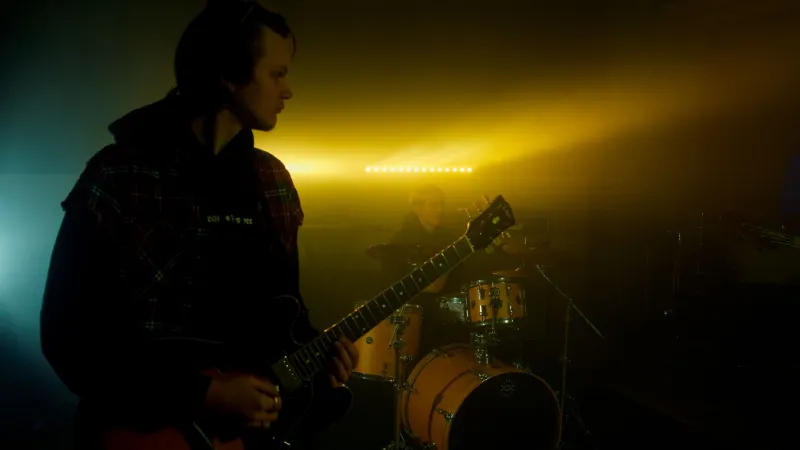
Photo: screenprinted gig posters on a venue wall UK underground, via coloring.co
There is a particular smell to a venue stairwell: stale lager, gaffer tape and fresh ink. On the wall, a screenprinted poster for a Thursday night in Leeds. Another for a basement in Bristol. A third for a split single launch that nobody outside the scene remembers but everybody who was there still talks about. The wall is not decoration. It is an archive, and it is one of the few the UK underground has not learned to back up.
In a playlist world, the poster is stubbornly physical. It cannot be skipped. It cannot be updated by an algorithm. It says: this happened, here, with these people. That is worth something.
The wall as a scene document
A gig poster is a primary source. It names the bill, the venue, the date, the designer and sometimes the printer. It shows what a scene looked like before the photos were edited. A run of posters from the Windmill or the Brudenell or a small club in Glasgow is a map of who was playing with whom and who was making the artwork. For future historians of UK underground music, those walls will be more useful than a thousand Instagram stories.
Posters also carry the identity of a venue. The best rooms have a visual language: a certain paper stock, a certain typeface, a certain way of printing the date. When a venue closes, those posters become evidence of what it was. When a scene moves on, they show where it went.
Short runs, real costs
Screenprinting is not cheap. A short run of 50 or 100 posters can cost more than the band makes on the door. That is why posters often disappear from the merch table. But they do not have to be a loss. A numbered artist edition can sell. A poster tied to a release can become the thing fans actually want to take home. The trick is to treat it as merch with a story, not as promo that gets thrown away.
Labels can help here. A small label like Freya Records can print a run for a split single or a showcase and give a copy to the venue, the designer and the artists. That is not just marketing. It is an archive being made in real time.
What gets lost when the wall goes digital
The digital flyer is useful. It is fast, cheap and accessible. But it is also fragile. Accounts get deleted. Links rot. The grid scrolls on. A poster on a wall is not permanent either, but it survives the phone upgrade. It can be found in a flat file, a venue storeroom or a fan's bedroom. It can be photographed and catalogued. It can be held.
This is not an argument against digital. It is an argument for keeping the physical artefact alongside it. Photograph the poster before it goes up. Note the designer, the printer and the run size. Keep one copy flat. Do not roll it into a tube and forget it. A poster that has been folded into a back pocket is still an artefact, but a flat copy is a better one.
How to keep the archive alive
- Print a small run for every headline show or split release
- Number and credit the artist edition
- Give one copy to the venue and one to the designer
- Photograph the poster in situ and on a flat surface
- Store a copy flat, away from damp and direct sun
- List the designer, printer and run size in your release notes
- Ask before taking a poster off a venue wall
The case for the artefact
Playlists are brilliant at making music available. They are less good at making a scene visible. A poster does that. It says who was in the room and what it felt like to be there. It is merch, memory and evidence in one sheet of paper.
So next time you print a run, keep one back. Put it on the wall, then put one in the archive. The scene is already writing its own history. The least we can do is give it something to remember it by.